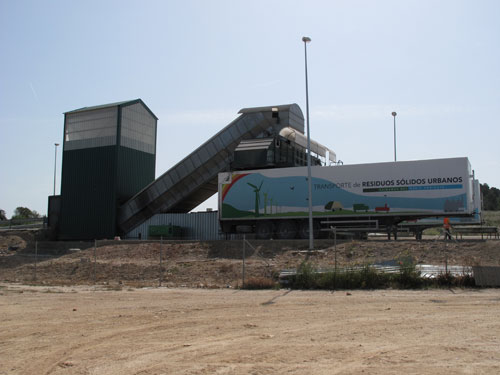
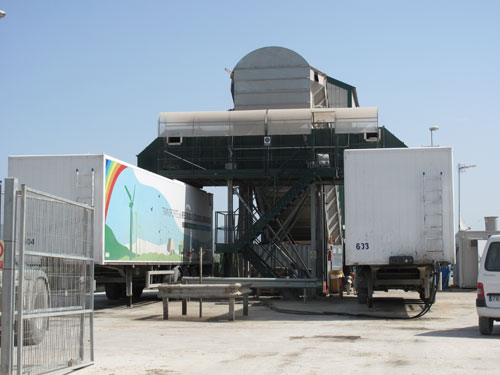
Waste transfer stations are facilities where municipal solid waste is unloaded from collection vehicles and briefly held while it is reloaded onto larger long-distance transport vehicles for shipment to landfills or other treatment or disposal facilities. By combining the loads of several individual waste collection trucks into a single shipment, communities can save money on the labor and operating costs of transporting the waste to a distant disposal site.
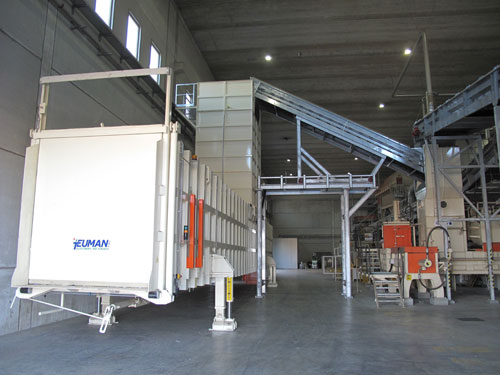
They can also reduce the total number of vehicular trips traveling to and from the disposal site. Although waste transfer stations help reduce the impacts of trucks traveling to and from the disposal site, they can cause an increase in traffic in the immediate area where they are located. If not properly sited, designed and operated they can cause problems for residents living near them.vertical compression of refuse transfer station is one set of special equipment for environmental sanitation which specifics to mass household trash.
It is adopted our large advanced technique of refuse compression. This equipment is featuring high efficiency of compression, strong environmental adaptation, high reliability and durability. Combining with the developed matched self-discharging refuse transfer vehicle. It will mainly meet the need of refuse processing in small-medium cities and large towns.